
Spanish Fork Directory Collections
The located material is regional rather than a single city-run database. The R.L. Polk and Company Provo City and Utah County directory scan places Spanish Fork on pages 241 through 252. Its printed page and heading are the authority for an entry. The University of Utah City Directories Collection describes books that list residents, streets, businesses, organizations, and institutions, often with advertisements. An occurrence for Spanish Fork still needs item-level confirmation.
| Collection | Located Years or Lead | Where Held | Access |
|---|---|---|---|
| R.L. Polk Provo City and Utah County scan | Spanish Fork section, pp. 241–252 | Genealogy-hosted PDF | Free scan |
| University of Utah City Directories | Regional collection; item years vary | Digital collections | Search and item review |
| Spanish Fork Library catalog | Current catalog and historical-photo lead | 80 S Main, Spanish Fork | Catalog, staff question, card/PIN route |
| Utah Archives municipal series | City records from 1855 onward in several series | State Archives | Finding aid and reference request |
| Provo county-history fallback | Obituaries from the 1870s–2007; newspapers | Provo Library | Index and staff help |
No complete continuous Spanish Fork city directory run was located. Missing years may reflect a real publication gap, an uncataloged item, or a source that requires a library visit. Do not fill the gap with an assumed year.
Reading a Spanish Fork Entry
A city directory entry is a dated printed placement record. It may show a person’s name, occupation, spouse or household notation, address, business role, or an owner or renter mark when that volume uses one. The entry’s abbreviations and page layout matter. Read the printed heading, year, publisher, and page before interpreting a name.
| Name | The listed individual or household head; a spouse can appear in parentheses or a separate line. |
|---|---|
| Occupation | A trade, profession, or business role printed for that edition. |
| Address | The house number and street as printed at that time. |
| Residence mark | Some volumes distinguish a home, boarding place, or business entry using abbreviations. |
| Owner notation | Only treat an owner mark as meaningful when the volume explains its symbol. |
“Index” means a finding aid. “Image” means the page or document itself. A directory image supports what the printer placed on the page. It does not by itself establish a deed, current occupancy, legal kinship, or an unbroken span of residence.
- Criss-cross directory
- A reverse address reference that points from a street location toward a name.
- Householder index
- A name-led list of household heads or principal entries, not necessarily everyone at an address.
- Abbreviation key
- The publisher’s explanation of marks for residence, occupation, spouse, or business status.
Use the Polk Spanish Fork Pages
The R.L. Polk scan is useful because its title is regional while its pages contain a Spanish Fork section. Start with the printed city heading. Capture the page number, name spelling, street, occupation, and any mark beside the entry. Then compare the street with a modern parcel map only as a present-day orientation step. The old page remains the source for the historical claim.
Open the R.L. Polk directory scan and review the Spanish Fork pages before relying on catalog shorthand.
Genealogy-hosting metadata is a lead, not a replacement for a library or archive catalog. Cross-check the visible title and year with the University of Utah directory collection or a reference librarian. If a street or person is absent, record the search spelling and page range. A partial scan can explain a gap without proving the person was absent from the city.
Ask the Spanish Fork Library
The Spanish Fork Library is at 80 S Main. Its published hours are Monday through Thursday 9 a.m. to 8 p.m., Friday 9 a.m. to 6 p.m., and Saturday 10 a.m. to 5 p.m. The current catalog notice says users can search the library collection and historical photos from the University of Utah, with a library-card and PIN login route. The public library page does not name a local-history room or give a holdings-level directory list.
Ask a catalog librarian for Spanish Fork city directories, reverse or criss-cross volumes, yearbooks, clipping files, photographs, oral-history material, and the exact newspaper run. Ask whether a volume is on an open shelf, in storage, on microfilm, or available through a partner. This direct question closes a documented research gap rather than turning an unknown shelf into a fact.
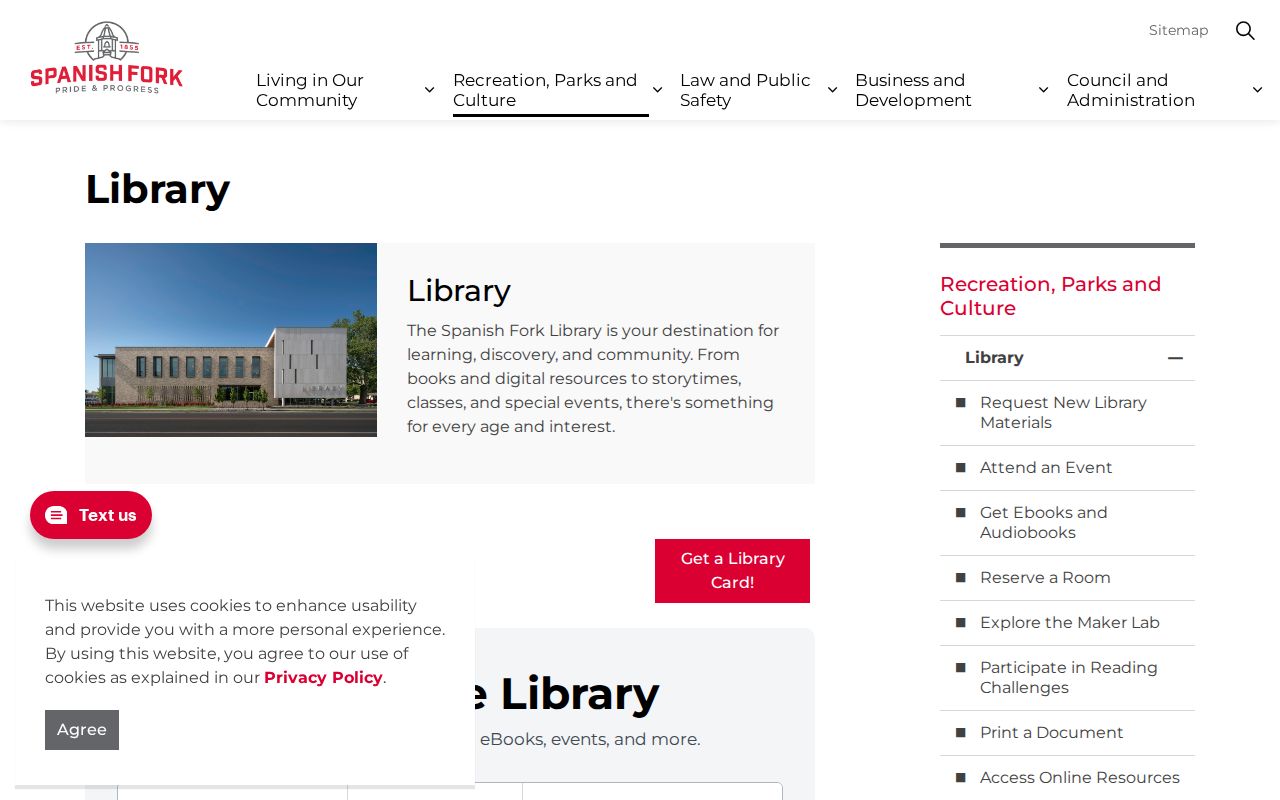
The Spanish Fork Library page is the starting point for catalog, hours, and staff access.
Regional Help Beyond City Hall
Provo Library’s Utah County Obituary Index contains about 20,000 entries from the 1870s through 2007 and points researchers toward historical newspapers and burials. The Provo Library is at 550 N University Ave, Provo, and lists 801-852-6650. The Utah Historical Society research center provides a special-collections catalog, newspapers, Utah Digital Newspapers, microfilm information, and appointment-based access. During the current move and research period, the published access window was Monday and Wednesday, 9 a.m. to 1 p.m., at 450 N State, Salt Lake City.
Utah State Archives is the better route for municipal records that are not on a city page. Finding aids identify Spanish Fork administration, ordinances, incorporation, real property, deeds, easements, planning, cemetery finance, police annual reports, and justice-court dockets. FamilySearch’s Utah County deed and mining catalog can provide index and image leads, though an account, FamilySearch Center, or permission may be needed.
Use the Utah Historical Society collections page to check catalog and newspaper access before a visit.
Pair Directories With Census Years
To trace a household, choose a directory year, capture the printed page, and then look for the same name and street in a nearby census year or record set. Do not require an exact match. A person can change occupation, a street can be printed differently, and a household can move between editions. Keep the directory date separate from a residence period.
- Write the directory title, publisher, printed year, page, name, and address exactly as shown.
- Check the next available directory or a neighboring edition for the same spelling, street, occupation, and household mark.
- Compare the address with county parcel, plat, legal-description, or recorder material when the house is the research subject.
- Use an obituary, burial entry, newspaper, probate file, or eligible vital record to test dates and family relationships.
- Mark every missing year, image restriction, uncertain abbreviation, or boundary issue in the log.
The result is a chain of dated clues. A directory entry can show printed placement, while a deed shows a recorded instrument and a cemetery record shows burial data. Each source should retain its own wording.
Spanish Fork’s Historical Context
City history places a first home in 1850, a fort in 1854, and incorporation in January 1855. The 2005 newsletter says Palmyra residents joined Spanish Fork in 1856, the telegraph arrived about 1867, and the Rocky Mountain Star was the first named newspaper in May 1891. These facts supply useful search terms for directories and newspapers, but they do not identify the ancestry or residence of a particular living person.
Boundary history matters too. The earliest recorded city boundary is 1872, followed by major de-annexations in 1899 and 1904, smaller annexations in 1952, 1961, and 1964, later expansion in the late 1960s and 1970s, and a 2007 map for the current boundary. Preserve the place-name printed in an old directory. Check the map or legal description before normalizing it to modern Spanish Fork.
A Cemetery Numbering Caution
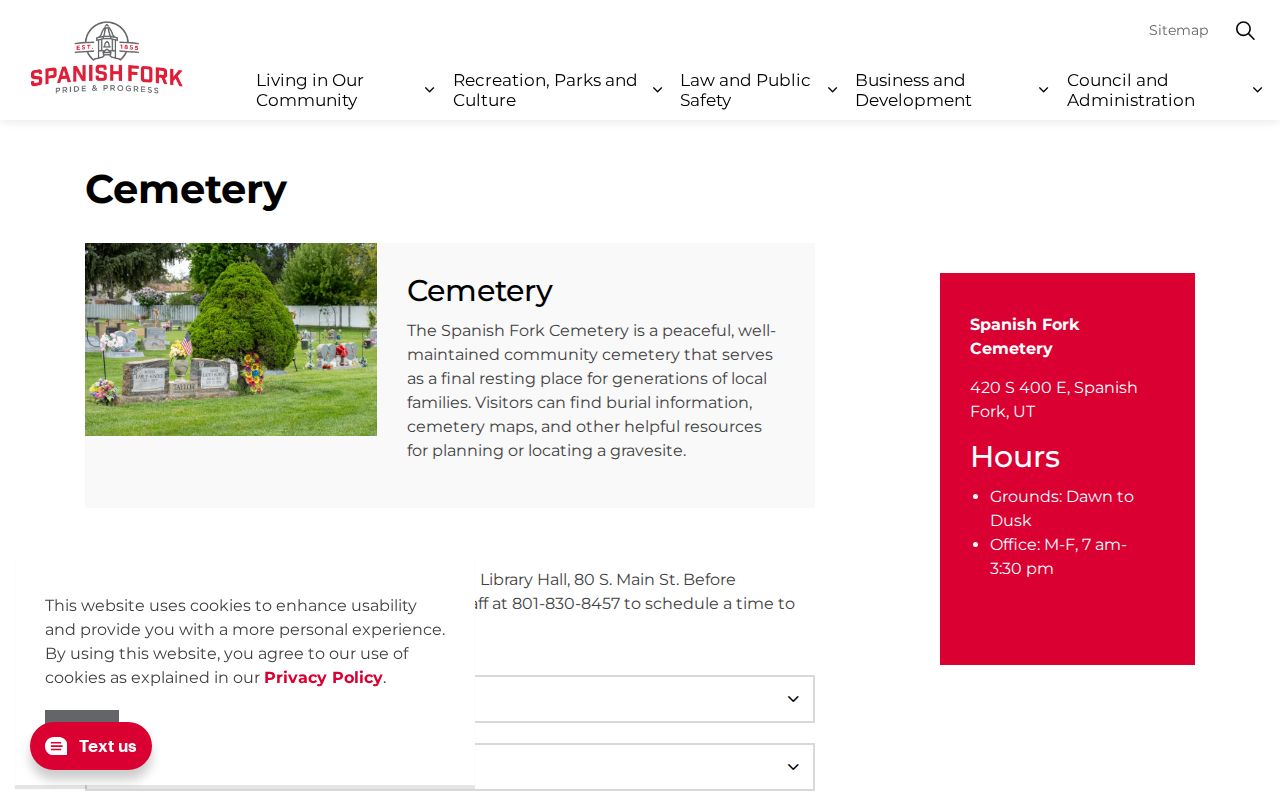
The Spanish Fork cemetery page reports a first burial in 1853, official establishment in 1868, 32 acres, and more than 12,000 headstones. The same city material separately describes more than 2,000 database entries. Physical markers and indexed entries are different measures. The difference is a useful reminder to ask what a collection counts, when it was updated, and which years it includes.
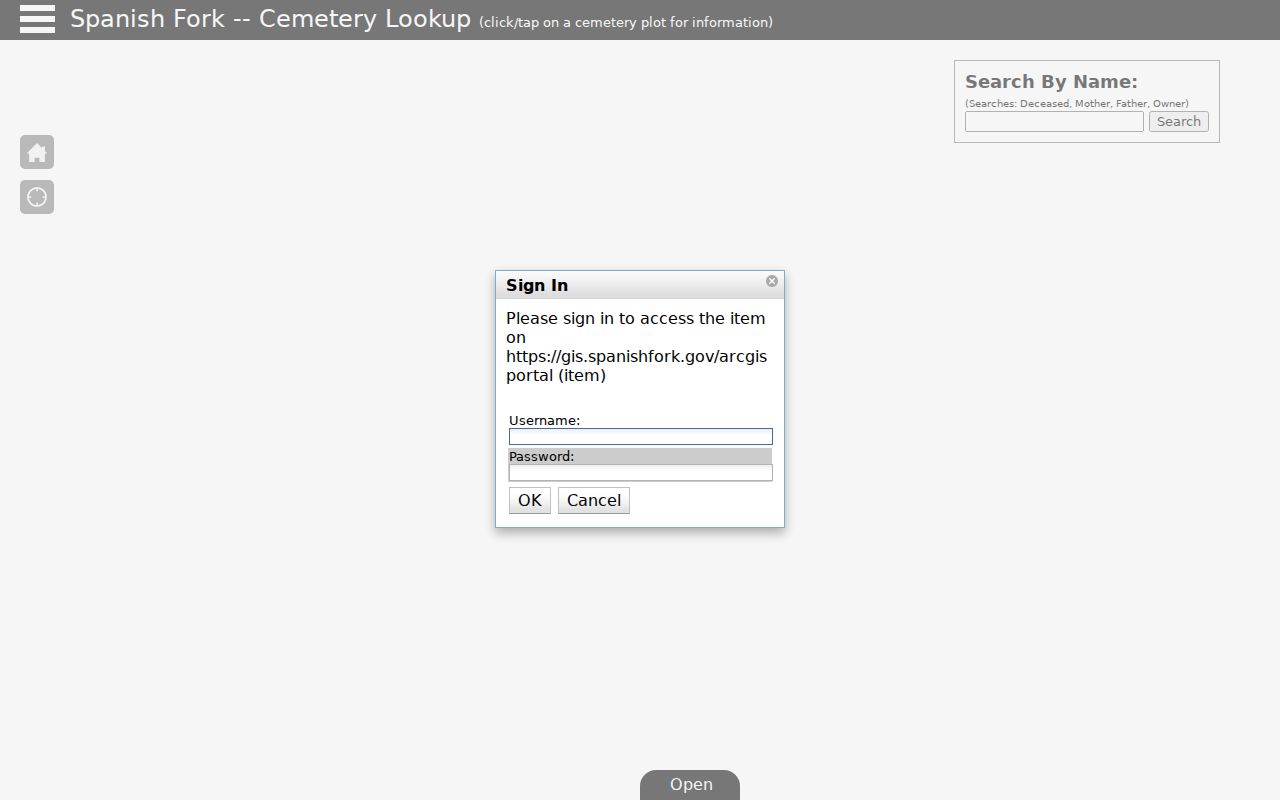
The cemetery viewer searches Deceased, Mother, Father, and Owner, then can show grave location, full name, family fields, birth and death places and dates, burial date, owner, and ID. Treat it as a lead for family history. Confirm a legal or vital fact with the proper custodian.
Keep the Printed Evidence
For each Spanish Fork city directory result, retain the source title, publisher, year, page, image or catalog URL, exact spelling, address, occupation, and any abbreviation key. Note whether the item is a scan, index, catalog description, or staff report. If the exact year run is unknown, say so. A transparent gap is more useful than a guessed publication history.
Use with care. Historical directories support genealogy, local history, and address research. They do not prove current identity, current residence, ownership, or a family relationship without a second source.
When a directory search points to modern records, use the address-led Spanish Fork street directory route for current parcel and document work. When the question is one person, use the resident lookup and keep the directory page as historical context.