
What a Spanish Fork Lookup Can Confirm
A name search is a sorting step. The result becomes useful only when the record category matches the question. Utah County property tools can show a named owner beside a parcel. Xchange can show a public case party and case history within its scope. The voter form is designed for a voter’s own registration check. Vital and cemetery sources can support family-history work. DOPL and business systems identify credentials or entities, not a person’s private home.
| Record | What It Confirms | Where | Access |
|---|---|---|---|
| Parcel or assessor index | Owner name, serial, site address, tax area | Utah County Assessor | Public web tools |
| Voter registration | Registration information for the voter’s own check | Utah voter search | Public/private fields vary |
| Court case record | Party, case number, filing, history, disposition when public | Utah State Courts Xchange | Billable search and documents |
| Vital or cemetery record | Birth, death, burial, family or date lead | Utah OVRS, county, cemetery | Eligibility or public-age rules |
| License or business file | Credential, entity, filing or status | Utah DOPL and Commerce | Public search, limits on address fields |
If the question is who sits on a street, move from a name-led search to the address method in the Spanish Fork street directory lookup. Historical names and old addresses belong with the city directory collections.
Begin With a Place Anchor
Same-name errors shrink when a name is tied to a parcel, city, or date before deeper searching. The Utah County Parcel Map accepts an address, owner name, serial, book-page reference, PLSS section, or city. Its address tips support common abbreviations and directional letters. The assessor name form asks for “Enter Name to search for,” gives LAST, FIRST MIDDLE as the format hint, and offers All Records, Current Records Only, and Never Valid Only.
Record the owner name, serial, tax area, years valid, property address, city, and pagination shown in the result. Then compare SITE_ZIP5 and other situs fields with OWN_ZIP5 and the mailing address. A person in a result may be an owner, not a current occupant. A business name may be an entity or principal record. This careful label is the first defense against a false match.
Use the Utah County name search to see the actual name and record-scope controls.
Verify One Spanish Fork Name
A useful verification chain starts with a place, then tests a second record with a different custodian. Never treat matching names alone as enough. Keep a positive result’s direct URL, case or document number, date, and the field that connects it to the person or place.
- Anchor the name to a Spanish Fork parcel, a known date, or a family record, and write down the source classification.
- Run the Utah court party search with last name, first name, wildcard or spelling variants, and the narrowest court or county scope.
- Compare the case location, party type, filing date, and address if filed. Do not infer a current address from an old case.
- Use the cemetery, obituary, archive, or eligible vital route when the question concerns a death or family relationship.
- Confirm an important claim with the source document or custodian, then mark any private, sealed, missing, or redacted field as unavailable.
- Docket
- The court’s running record of filings, hearings, orders, and other case events.
- Index versus image
- An index helps find a record; an image or document is the underlying filed material.
- Certified copy
- A copy issued by the custodian as an official copy under that office’s rules.
- Disposition
- The recorded outcome or status of a case or charge, which may differ from an allegation or booking.
Spanish Fork Xchange Search Fields
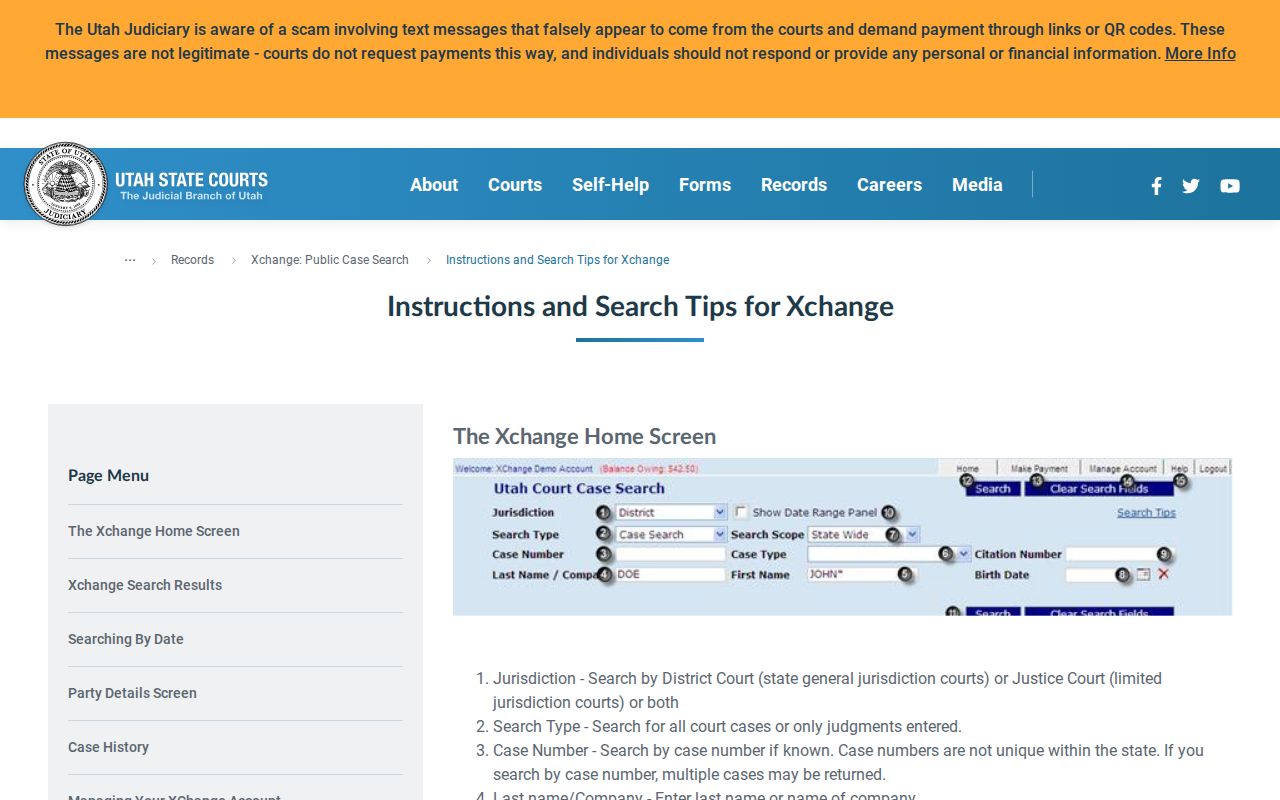
Utah State Courts Xchange lists district and justice cases. Spanish Fork coverage begins March 2, 1998 in the coverage material. The official help route orders the fields as follows:
| Jurisdiction | District Court, Justice Court, or both. |
|---|---|
| Search type | All court cases or judgment-only. |
| Party and case | Case number, last name or company, first name, and case type. |
| Scope | Statewide, county, or a specific court. |
| Extra filters | Birth date, citation number, citation location, and date panel. |
| Date panel | Case filings, case disposition, judgment, and judgment disposition. |
Use a wildcard such as an asterisk for name variants and add a middle initial or suffix when known. A case number is not unique statewide without court or county scope. Results may show county, court location, case type, case number, filing date, party names and codes, attorneys, hearings, judgments, charges, plea or disposition, and documents. Xchange permits up to 500 results.
Review the official Xchange help fields before paying for a broad name search.
Voter Lookup Is a Self-Check
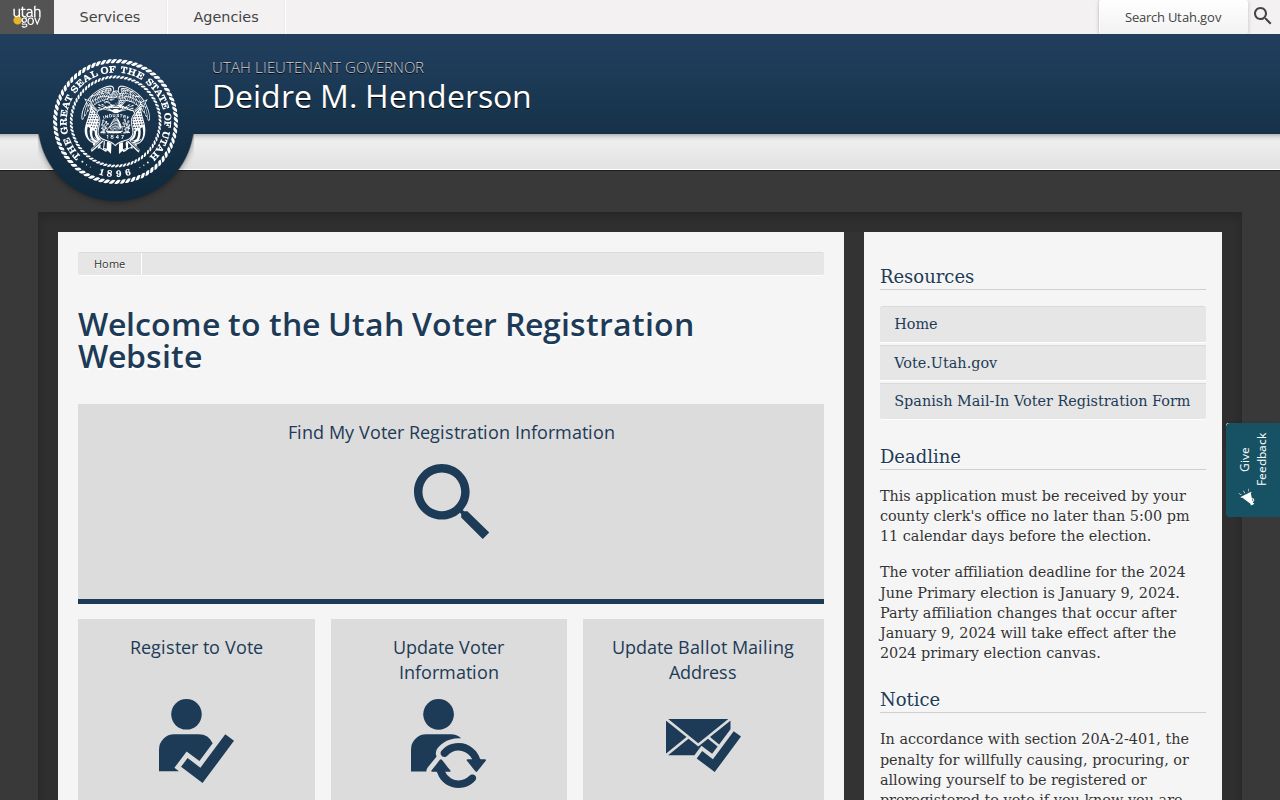
The Utah voter information form asks for First Name, Last Name, DOB, Street Address, City, and ZIP, followed by Submit. It is intended for an individual to find their own registration record. Public voter data can include name, physical or mailing address, year of birth, party, precinct, district, and vote history. Full DOB, identification numbers, Social Security numbers, email, and phone are private. At-risk records may be withheld or anonymized.
Utah County Elections is at 100 E Center St, Suite 3100, Provo, and lists 801-851-VOTE. Mail, email, in-person, drop-box, and same-day registration channels are described by the county. Bulk lists and who-has-voted files are different election-administration products with stated fields, prices, dates, and privacy exclusions. They are not complete current-resident rosters. Do not use a public list to infer a person’s precise birth date, phone, email, safety status, or ballot choices.
Vital and Cemetery Checks
Utah birth records become public after 100 years, death records after 50 years, and marriage or divorce records after 75 years under the state and county guidance. Recent certified copies require the relationship or direct, tangible, legitimate interest required by the custodian. The secure OVRS order form’s current field and fee inventory was not captured, so use the live portal or county counter rather than a legacy form.
The Spanish Fork cemetery viewer searches deceased, mother, father, and owner. Visible details can include grave location, full name, parents, birth and death dates and places, burial date, owner, and ID. The Provo Library obituary index has about 20,000 Utah County entries from the 1870s to 2007. An obituary or cemetery line is a lead. It does not replace a certified certificate.
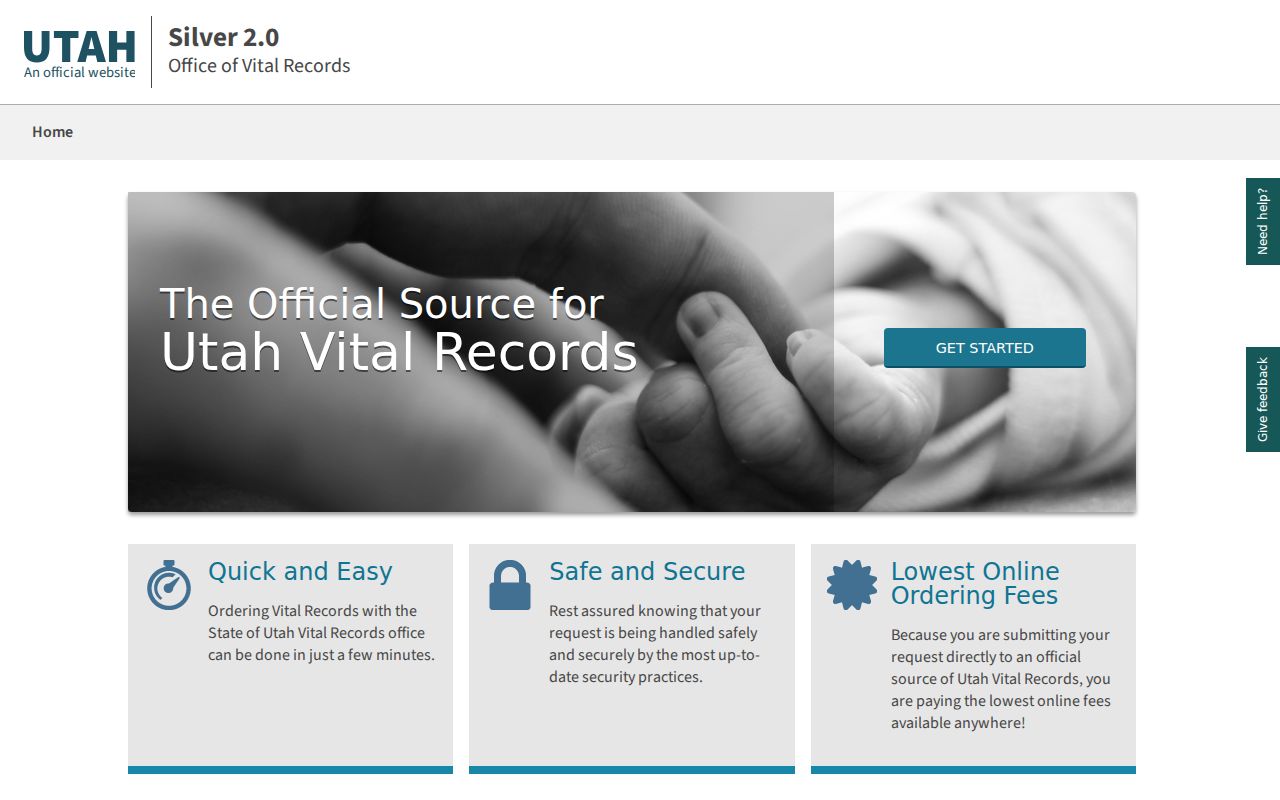
The Utah vital records route explains the state starting point for certificate access.
Jail, Registry, and Court Scope
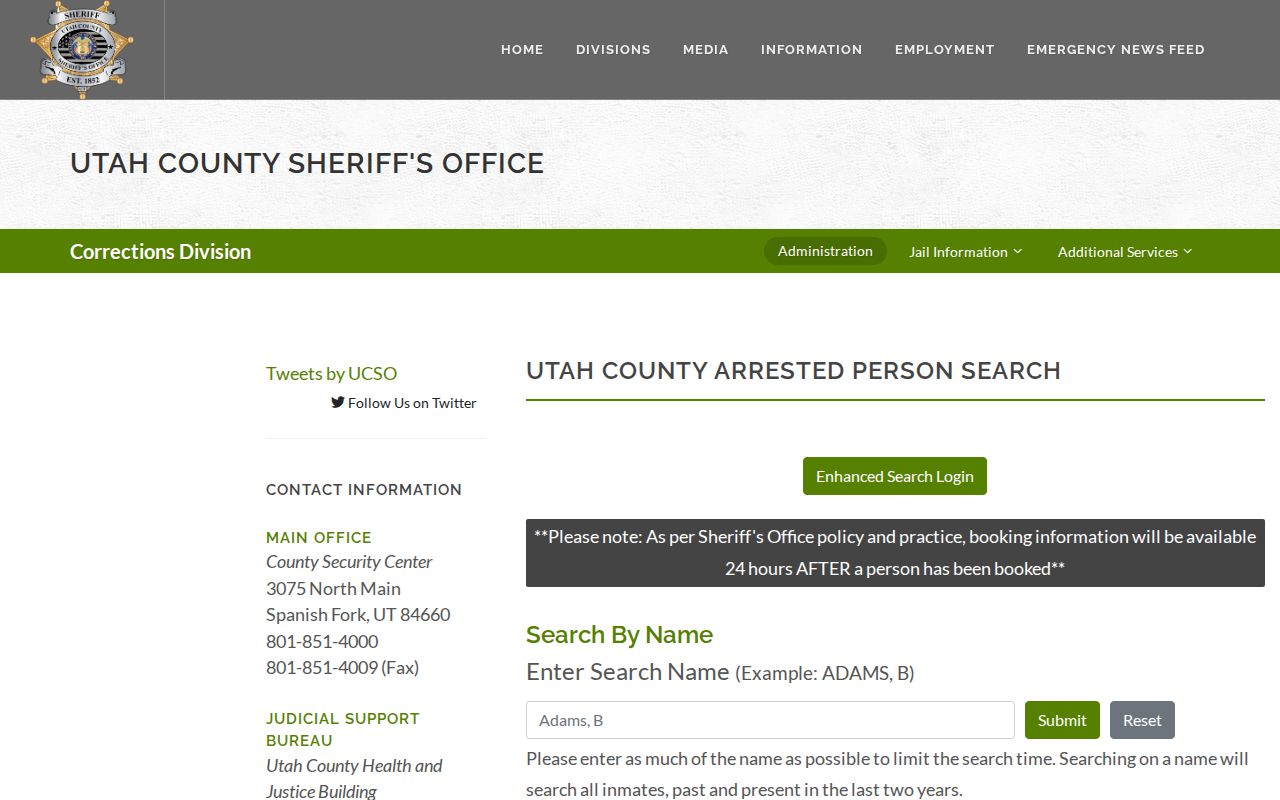
The Utah County jail search covers past and present inmates for two years. Booking information becomes available after 24 hours, a booking photo is retained for 30 days, and other information for one year. Search controls include partial name, arrested date, and Current Inmates. Results can show arrest and booking dates, booking number, release date, arresting agency, and status. A booking is not a conviction.
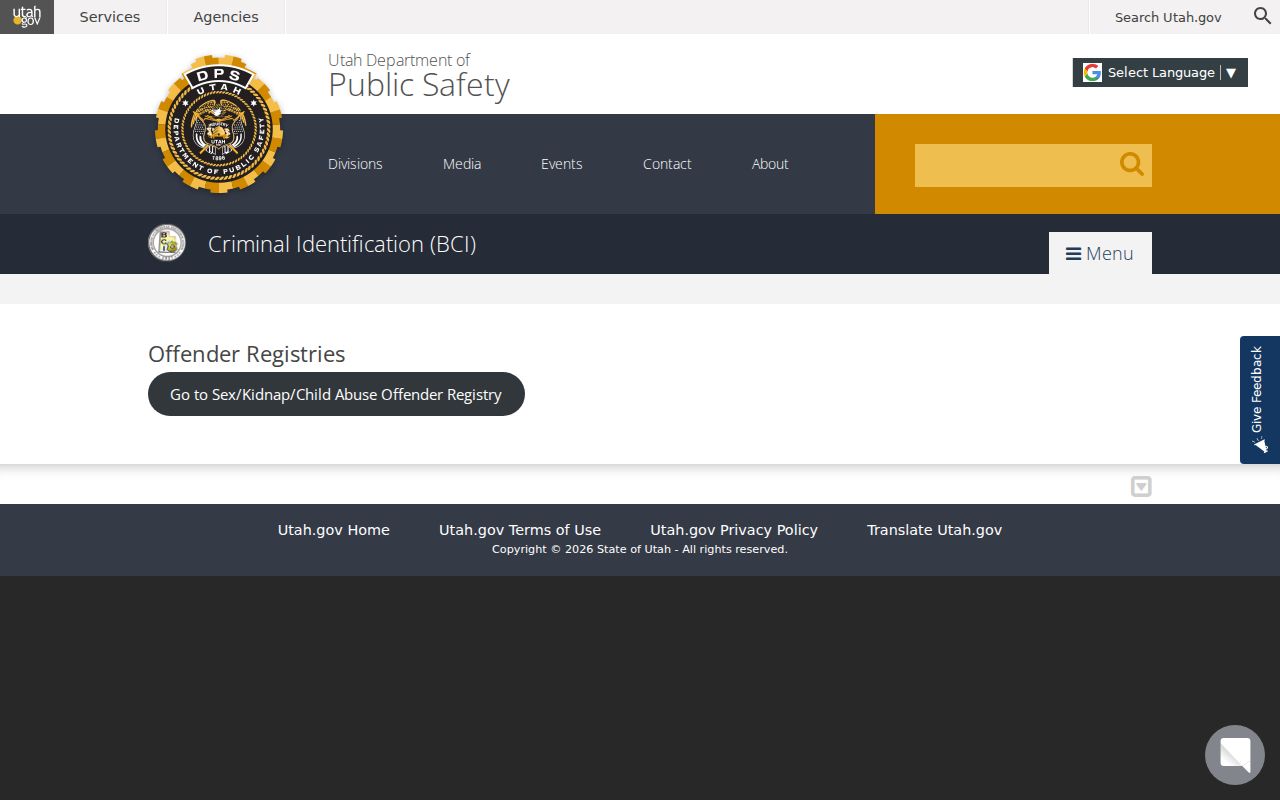
Utah DOC searches by name or UDC ID and may show custody, sentence, parole, and expiration information. BCI’s offender registry has its own statutory search, warning, and anti-harassment acknowledgment. BCI personal-history access is a person’s own route, not an unrestricted third-party name file. If a record is outside one system’s scope, the answer may be the state Archives, a clerk, or the proper custodian, not a different guess.
See the Utah County jail search for the current name, date, and status route.
Business and License Names
Utah Commerce entity search can show a business number, entity type, business name, address, registration or expiration, status, status reason, renewal, applicant, and NAICS fields. Principal exports can contain a member position, full name, and address. Those are business records. A principal or registered address is not a conclusion about a private residence.
DOPL offers name and profession or license-number searches. Results can include name, profession, license number, and expiration. Its professional list supports profession, comma-separated ZIP, date, entity type, and status filters. List data is updated nightly around 9 p.m., while address and phone fields may be exempt. A license, discipline file, or unclaimed-property match should stay in its own category.
Protected Records Stay Protected
Utah Safe at Home and voter privacy processes can protect people facing abuse, stalking, violence, qualifying threats, or other listed circumstances. A substitute address is not the person’s actual location. Court records can be sealed or private. Vital records can be restricted. Utah’s GRAMA process does not open a record that another statute protects.
The city recorder handles Spanish Fork GRAMA inquiries at records@spanishfork.gov and 801-804-4530. A request should identify the record, custodian, date range, and format. A city police request can require photo ID, subject or guardian status, authorization, case number, and a narrow description. Active reports and protected third-party data may be withheld or redacted.
Read the Utah BCI registry notice for the statutory scope and warning shown with registry searches.
Lawful use. A Spanish Fork resident lookup belongs to personal, civic, legal, or family-history research. Do not use a result to stalk, harass, intimidate, expose a protected address, or combine systems to defeat a privacy control.
Interpret a Lookup Result
Use the source’s own word. Say “filed party,” “parcel owner,” “registered voter,” “licensee,” “decedent,” or “booking record” instead of treating every name as a resident. A positive result should have identity, placement, substance, and date. A negative result should state spelling, scope, date, and exclusions. Keep one result from becoming a claim about current presence, character, or risk.
For older Spanish Fork questions, the Utah State Archives lists municipal real-property files from 1936 to 2019, municipal deeds from 1979 to 2019, and justice-court dockets from 1866 to 2022. These series are finding-aid leads, not instant web searches. Ask for the series, box or volume, date, and locality. The custodian decides what can be inspected or copied.